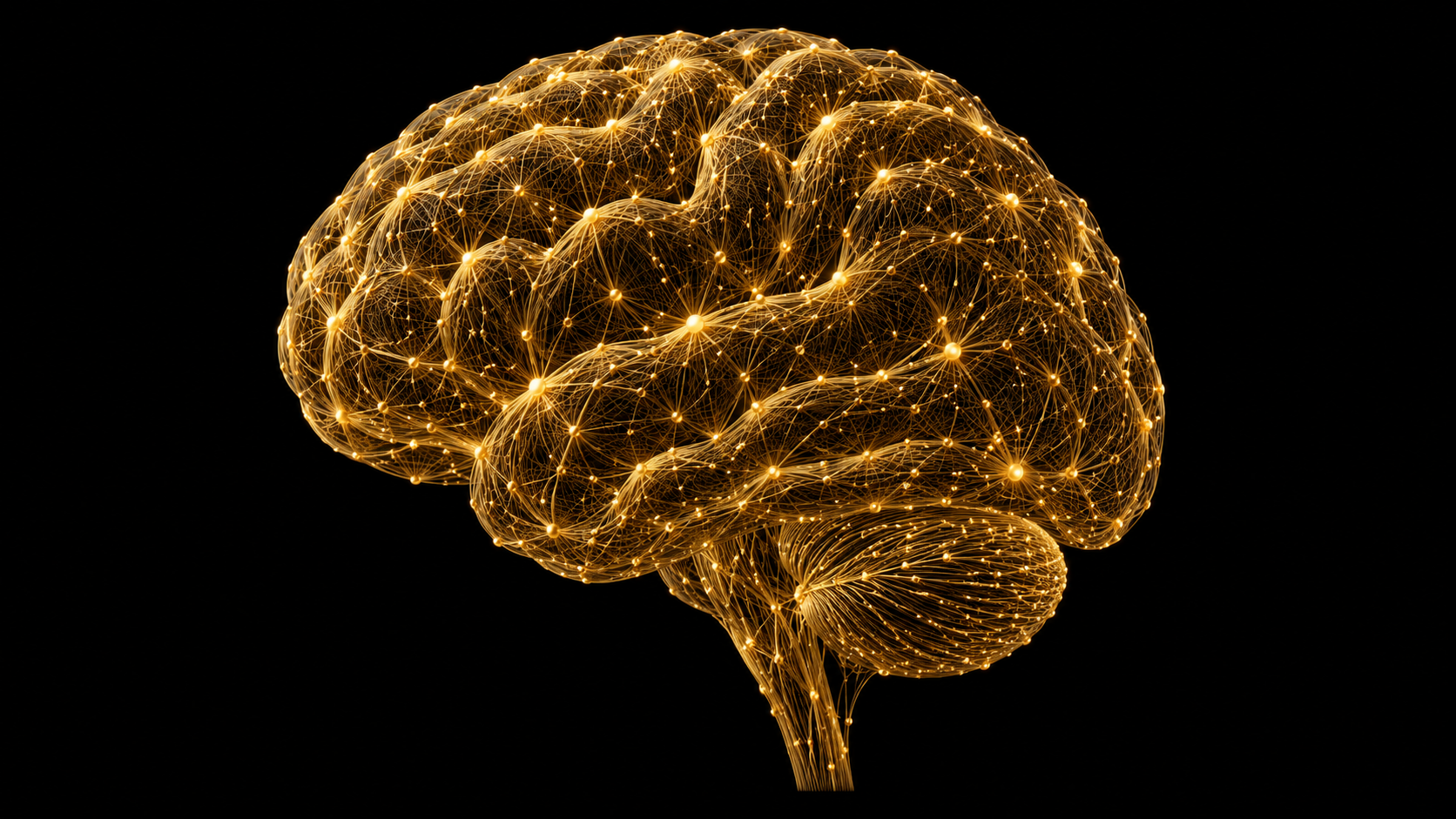
Artificial intelligence (AI) is a field of computer science focused on creating systems capable of performing tasks that typically require human intelligence.
These tasks include recognizing patterns, understanding language, making predictions, solving problems, and generating content.
From search engines and navigation systems to virtual assistants and medical imaging, AI has become part of everyday life.
How Does Artificial Intelligence Work?
AI systems process information using algorithms and computational models to produce outputs or make decisions.
While some AI systems rely on predefined rules, many modern systems learn patterns from data.
A typical machine learning system involves three stages:
- Data collection — Gathering relevant information.
- Training — Learning patterns and relationships within the data.
- Inference — Applying the trained model to new information.
For example, an AI system trained on labeled images of cats and dogs can learn to classify previously unseen images.
Main Branches of Artificial Intelligence
Machine Learning
Machine learning enables computers to learn patterns from data and make predictions without requiring every decision rule to be explicitly programmed.
Its three major learning approaches are supervised learning, unsupervised learning, and reinforcement learning.
Deep Learning
Deep learning is a branch of machine learning that uses artificial neural networks with multiple layers.
It powers applications such as speech recognition, image classification, and large language models.
Natural Language Processing
Natural language processing (NLP) focuses on enabling computers to process, interpret, and generate human language.
Applications include translation, text summarization, and conversational assistants.
Computer Vision
Computer vision enables machines to extract and interpret information from images and videos.
Common applications include medical imaging, manufacturing inspections, and object recognition.
Generative AI
Generative AI produces new content, including text, images, audio, video, and software code, based on patterns learned from training data.
Types of Artificial Intelligence
AI is commonly classified into three conceptual categories:
- Artificial Narrow Intelligence (ANI): Systems designed to perform specific tasks.
- Artificial General Intelligence (AGI): A proposed form of AI capable of performing a broad range of intellectual tasks at human-level capabilities.
- Artificial Superintelligence (ASI): A hypothetical form of AI that surpasses human intelligence across a wide range of domains.
Most AI systems used today fall within narrow intelligence, although their capabilities can span multiple tasks.
Real-World Applications
Artificial intelligence is used across many industries:
- Healthcare — Supporting medical image analysis and clinical decision-making.
- Finance — Identifying suspicious transactions and assessing risk.
- Education — Providing personalized learning experiences.
- Cybersecurity — Detecting anomalous behavior and supporting threat analysis.
- Transportation — Supporting navigation and driver assistance.
- Manufacturing — Improving quality control and predictive maintenance.
Limitations of Artificial Intelligence
AI systems are not infallible. Their performance depends on factors such as data quality, model design, and deployment conditions.
They can produce inaccurate information, reflect biases in training data, and struggle with unfamiliar situations.
Human oversight, continuous evaluation, security, and responsible governance are essential to managing these limitations.
Why Learn Artificial Intelligence?
Understanding AI helps individuals make informed decisions about the technologies shaping society.
Whether you are a student, software developer, business professional, or simply curious about technology, learning AI fundamentals provides a foundation for exploring machine learning, AI security, governance, and emerging intelligent systems.
Conclusion
Artificial intelligence is more than a single technology. It is a collection of methods and systems designed to perform tasks associated with intelligence.
Understanding how these systems work, what they can accomplish, and where their limitations lie is the first step toward using AI effectively and responsibly.