Artificial intelligence systems are increasingly capable of performing tasks beyond generating predictions or answering questions.
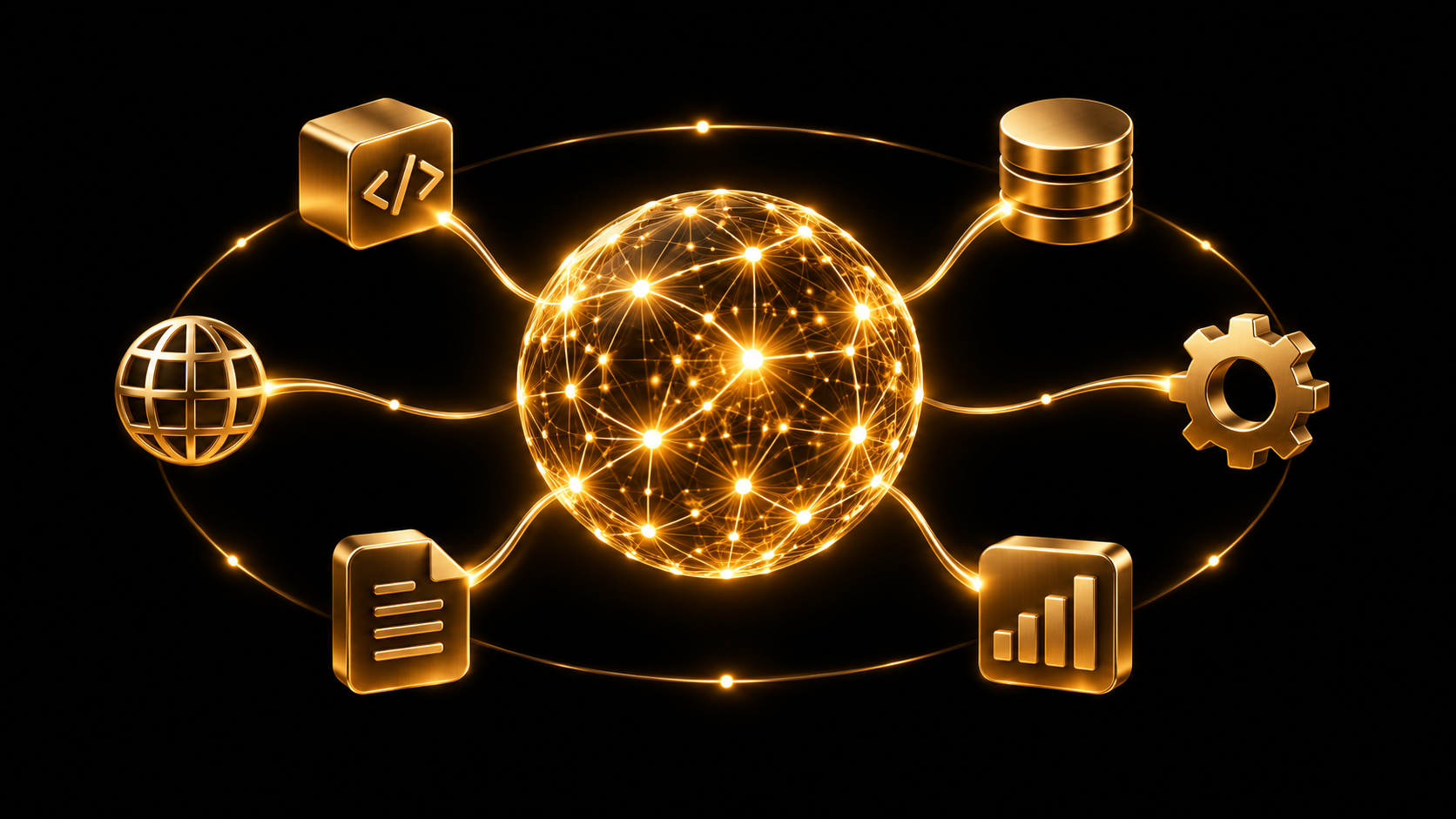
AI agents extend these capabilities by interacting with their environment, making decisions, and taking actions toward defined objectives.
What Is an AI Agent?
An AI agent is a system that uses artificial intelligence to pursue an objective by processing information, making decisions, and performing actions within an environment.
Unlike conventional AI applications that primarily generate responses, agents can interact with external tools, services, and information sources.
The level of autonomy varies depending on the agent's design and permissions.
Core Components of an AI Agent
AI Model
The AI model processes information and helps determine appropriate responses or actions.
Many modern AI agents use large language models to interpret instructions and support decision-making.
Planning
Planning enables an agent to break an objective into smaller tasks and determine an appropriate sequence of actions.
Memory
Memory allows an agent to retain relevant information from previous interactions or retrieve stored information when needed.
Tools
Tools enable agents to interact with external systems, such as databases, search engines, APIs, and software applications.
Environment
The environment represents the systems and resources within which an agent operates.
How Do AI Agents Work?
A typical AI agent follows a continuous process:
- Receive an objective or instruction.
- Gather and process relevant information.
- Determine an appropriate action.
- Execute the action using available tools.
- Evaluate the result.
- Continue or stop based on the objective and operating constraints.
Not every agent requires all these steps. Some follow predefined workflows, while others dynamically select actions.
AI Agents vs. AI Chatbots
A conventional chatbot primarily communicates with users by generating responses to their questions.
An AI agent can extend this functionality by interacting with external systems and performing authorized tasks.
For example, a chatbot might explain how to schedule a meeting, while an AI agent could check calendar availability and prepare a meeting invitation.
Modern applications can combine chatbot and agent capabilities.
Types of AI Agents
AI agents can be designed using several approaches:
- Reactive agents — Respond to immediate inputs or environmental conditions.
- Goal-based agents — Select actions to achieve defined objectives.
- Learning agents — Improve their behavior through experience or feedback.
- Multi-agent systems — Coordinate multiple agents to accomplish shared or individual objectives.
These categories can overlap depending on the system's architecture.
Real-World Applications
AI agents can support tasks across various industries:
- Software development — Assisting with coding and testing.
- Customer service — Retrieving information and processing support requests.
- Research — Gathering and organizing information.
- Business operations — Automating routine workflows.
- Education — Supporting personalized learning activities.
Security and Human Oversight
As AI agents gain access to external tools and resources, their actions must remain within defined authorization boundaries.
Important safeguards include:
- Clearly defined permissions.
- Restricted access to sensitive information.
- Human approval for consequential actions.
- Monitoring and audit logging.
- Limits on autonomous operations.
These measures help organizations manage the risks associated with agent-based systems.
Conclusion
AI agents represent an important development in artificial intelligence, combining decision-making capabilities with the ability to interact with external systems.
Understanding their components, capabilities, and limitations provides a foundation for building and using AI agents responsibly.